How heavy is a coil, and how is it packed?
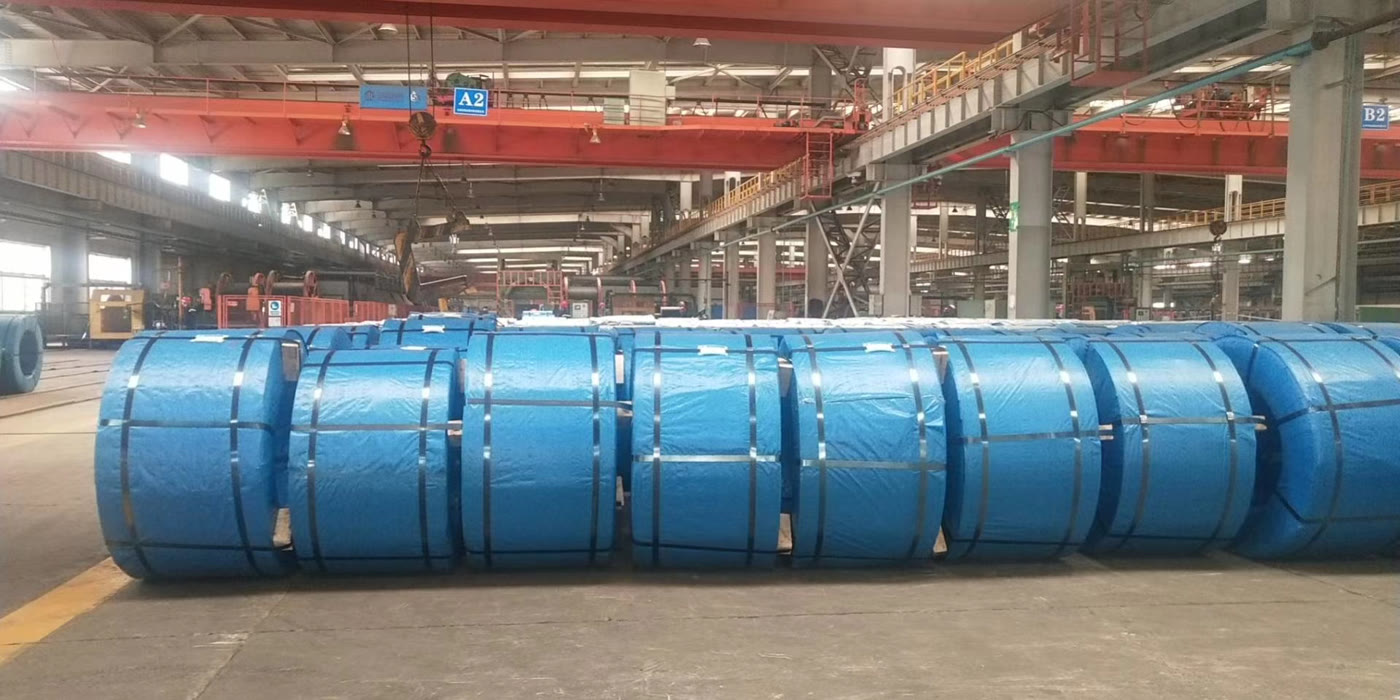
A coil of 15.2 mm strand weighs 3.0–3.5 t and holds roughly 2,700–3,300 m. It is strapped, seated on a wooden or steel support, and wrapped in waterproof paper or plastic film — then marked so the coil can be checked against its certificate without opening it.
Coil weight and length
Coil weight is a practical compromise: heavy enough to keep handling and freight cost per tonne down, light enough for a site crane or a forklift. At 3.0–3.5 t you get seven or eight coils in a 20 ft container. If your yard can only lift 2 t, say so — the mill can wind to that weight, and the length changes with it.
Packing layers
- Wrap — waterproof paper, hessian or plastic film that keeps rain and spray off the coil and doubles as the marking surface.
- Steel strapping around the coil, tight enough that the coil does not relax its shape in transit.
- Wooden or steel support underneath, so the coil can be lifted and stacked without damaging the outer wires. Pallet timber is export-treated where the destination requires it.
- Surface condition — a light rust-preventive spray, or a non-oiled supply, can be agreed in the contract. This is not a full-length oil coating. For orders to ASTM A416, confirm the surface condition in the contract: that standard requires the strand to be free of oil or lubricant that may impair bond.
Marking
Each coil carries its size, grade, batch number, heat number, weight and length. The marking matches the batch quality certificate exactly, which is what lets a site engineer reconcile the delivery against the documents in a few minutes instead of an afternoon.
What this means for you
If you are comparing offers, compare the packing, not just the price per tonne. Strand in a thin wrap without proper waterproof protection is cheaper to pack and more expensive to receive — rusted outer wires are usually rejected at site, and the argument happens after the ship has sailed.